Ingredients
Why is shilajit honey black? Colour, texture and quality explained
Why Shivvra shilajit honey is dark rather than golden, and why colour, texture and home tests cannot establish purity or safety.
The short answer
Shivvra’s blend is dark because it contains shilajit. Dark colour is a product characteristic, not proof of purity, strength or safety.
It is not a plain honey stick
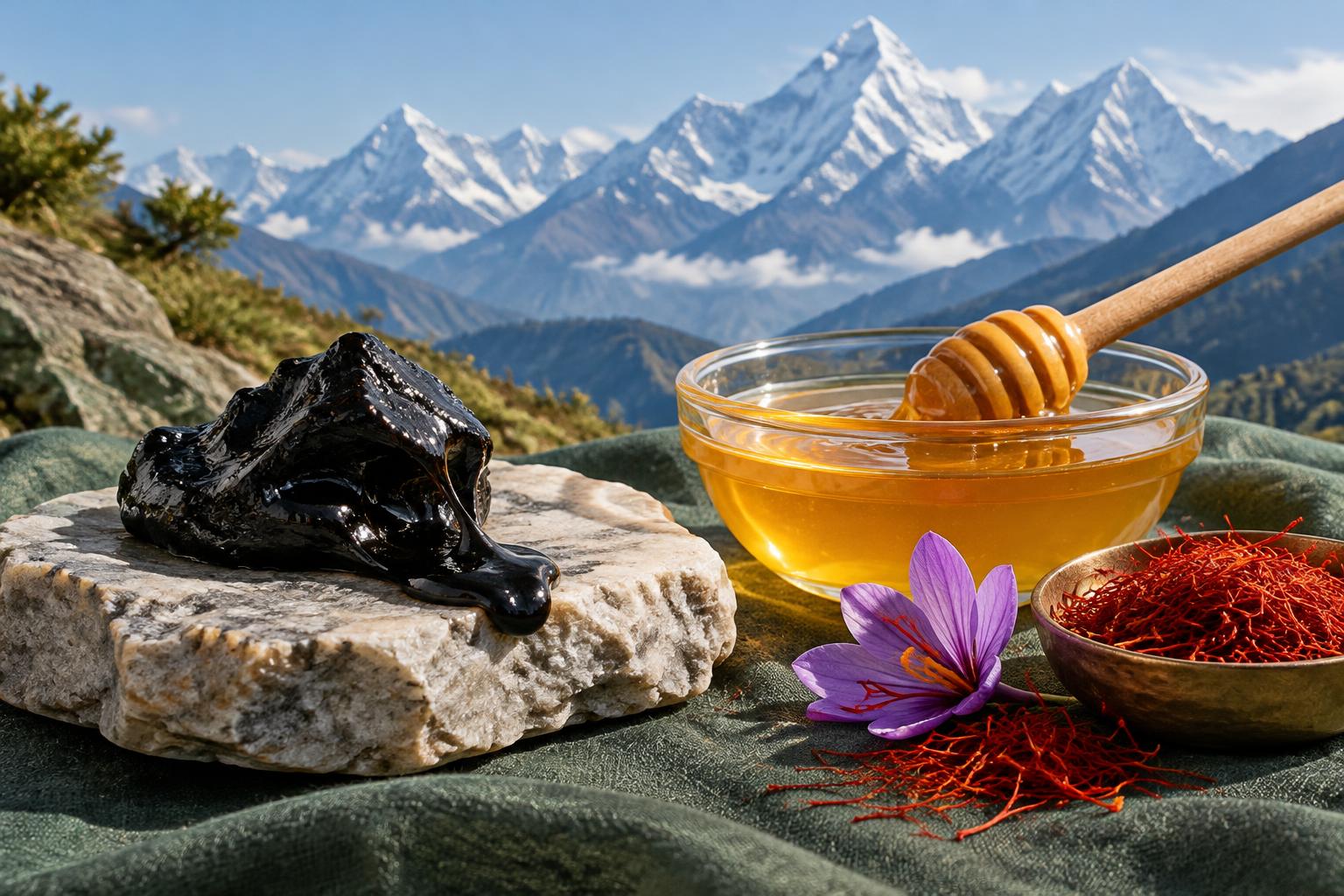
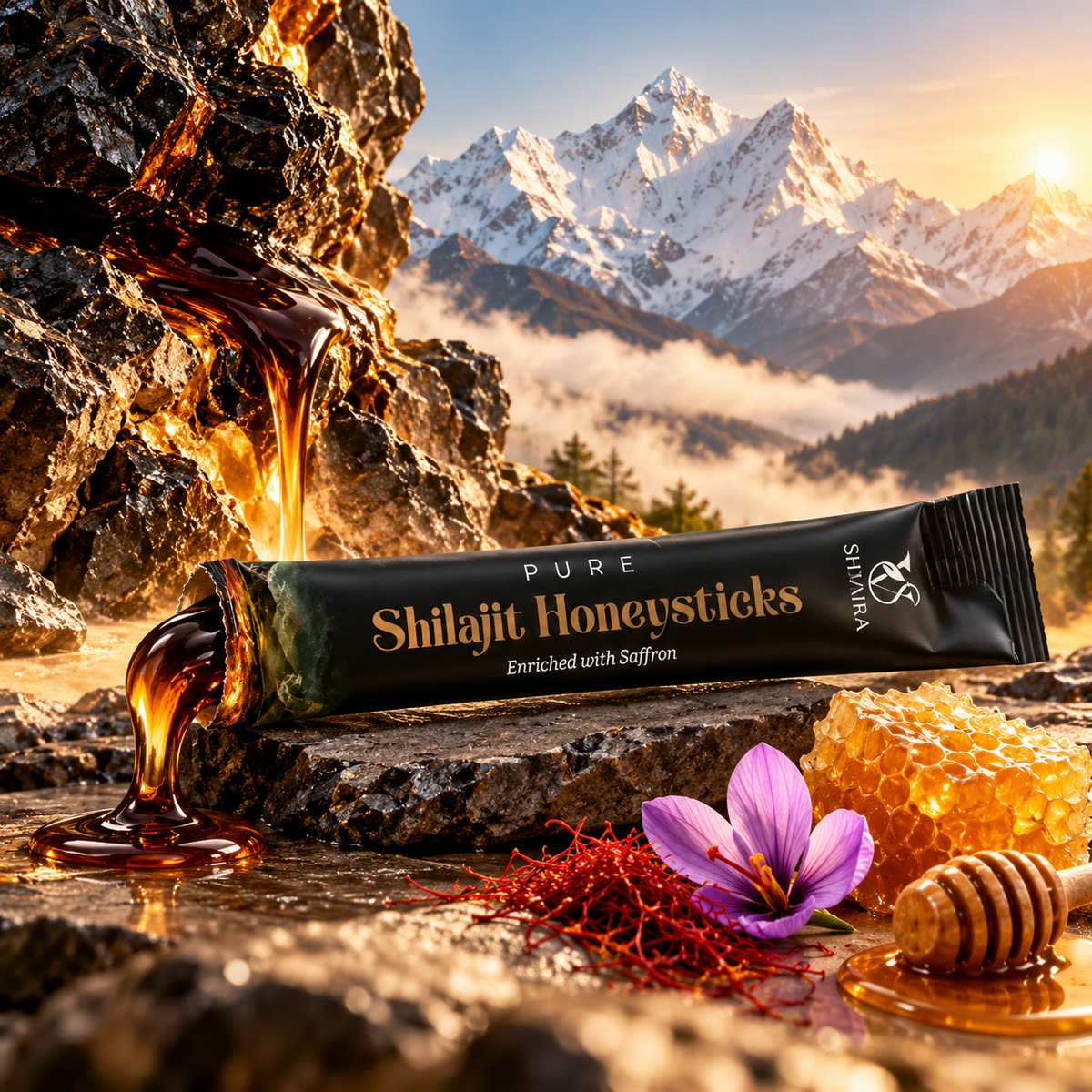
Plain honey is often pictured as golden or amber. Shivvra is a shilajit honey blend, so the liquid in its stick is dark rather than golden. The shilajit ingredient changes the appearance of the blend.
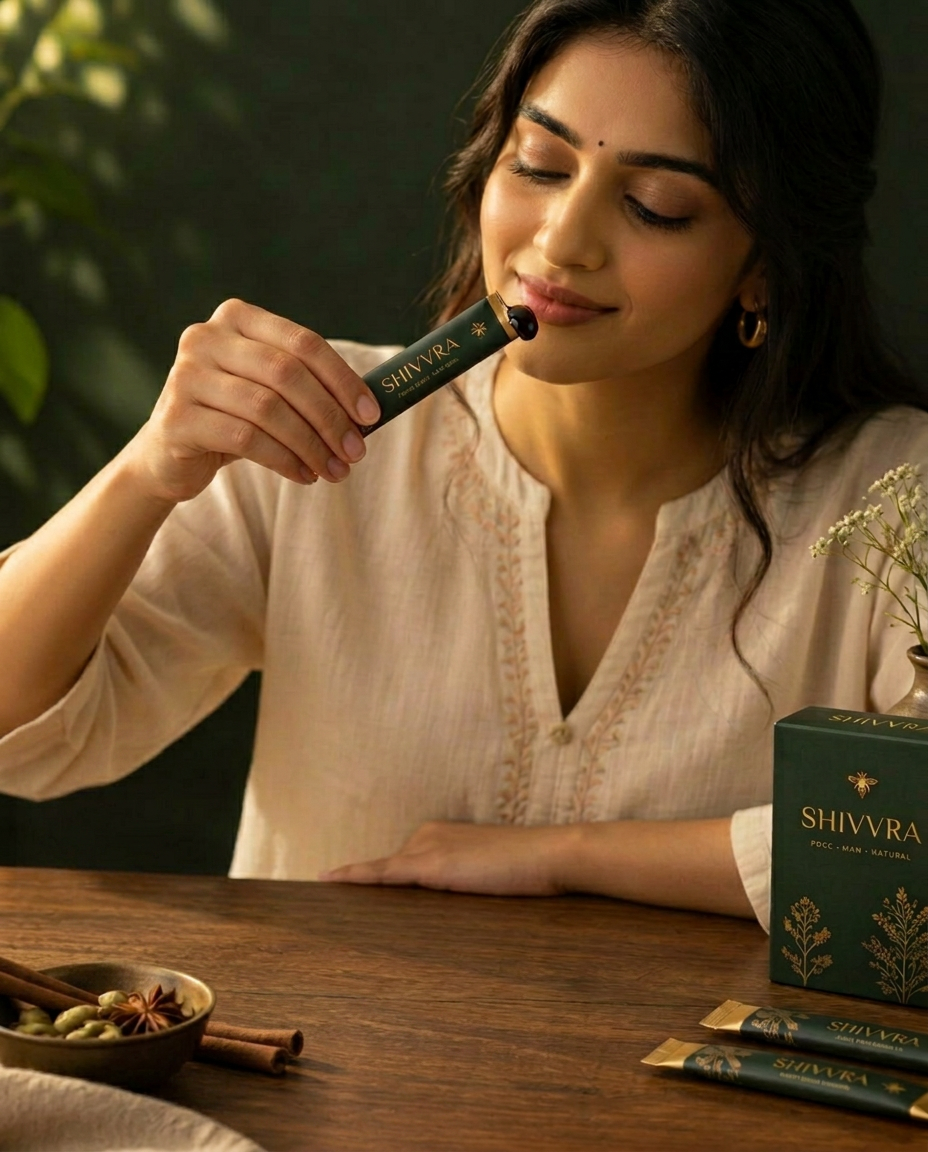
This distinction matters when looking at product photos. A picture of ordinary honey being stirred into tea does not accurately show the direct-use, dark shilajit honey routine.
Darkness is not a purity test
Do not use colour alone to decide whether a product is authentic, strong or safe. A dark liquid can look convincing without establishing ingredient identity or contaminant levels. Photographs, lighting and screen settings can also change how a shade appears.
There is no universal colour chart that proves the quality of every shilajit preparation. Reliable assessment requires a traceable product and relevant testing, not just a visual impression.
What about thickness and flow?
A honey-based blend can feel thick, but appearance and flow are not laboratory measurements. Temperature and formulation can affect handling. Do not leave a product in excessive heat to change its consistency; follow the storage directions on your pack.
An unexpected appearance, damaged seal or leaking sachet is a reason to pause and ask the seller. Normal-looking contents are not a reason to ignore an expired or compromised pack.
Why home “authenticity tests” are limited
Online advice sometimes suggests dissolving, heating or stretching shilajit as a purity check. These demonstrations do not establish identity, declared content or absence of contaminants. A honey blend also behaves differently from standalone resin.
Avoid flame tests or other risky experiments. A home demonstration cannot replace a validated laboratory method and may damage the product without answering the question you care about.
What to check instead
Keep the batch number, confirm the expiry date and ask what was tested in the finished blend. If a colour difference concerns you, share the batch details with the seller rather than trying to diagnose quality from a photo alone.
- Check that the original packaging is intact.
- Read ingredients and storage directions.
- Ask for a report relevant to the sample and batch.
- Treat colour as appearance-not a certificate of purity.
Sources & further reading
- FSSAI: manuals and methods of food analysis
- BMC Chemistry: thallium in shilajit and shilajit supplements
Educational information, not medical advice. These articles are not clinically reviewed. Ingredient research does not prove effects of the finished Shivvra product. Follow your pack’s directions and consult a qualified clinician about suitability. Editorial photographs are illustrative; some are AI-generated.
Meet the honeystick.
Shilajit, honey and saffron. Taken straight.