Daily ritual
Shilajit honey vs resin: which format fits your routine?
Compare shilajit honey sticks and resin by ingredients, serving information, handling and testing-not unsupported effectiveness claims.
The short answer
Honey sticks and resin differ in format and ingredients. Compare declared shilajit amounts, directions and testing before comparing convenience.
The main difference is the formulation
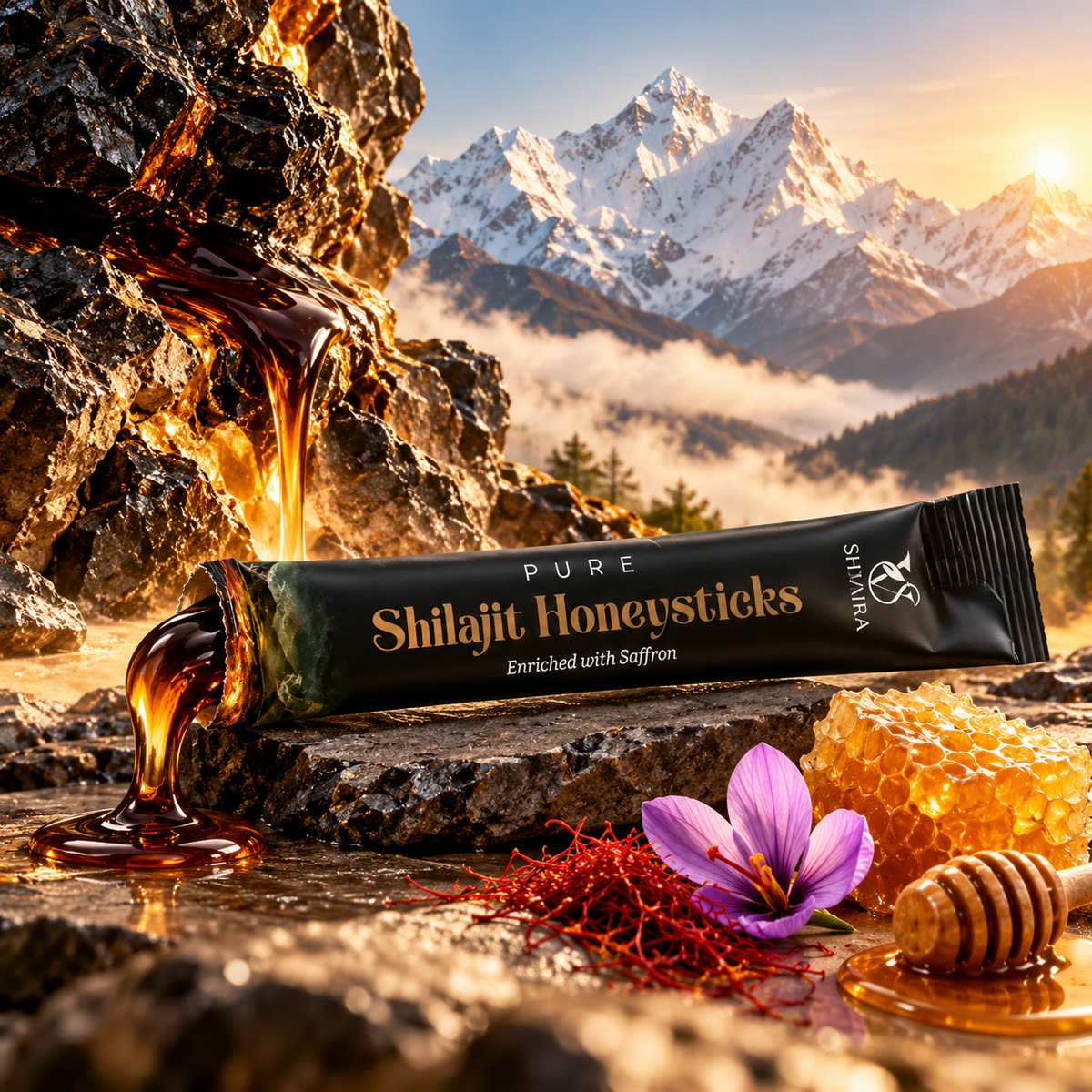
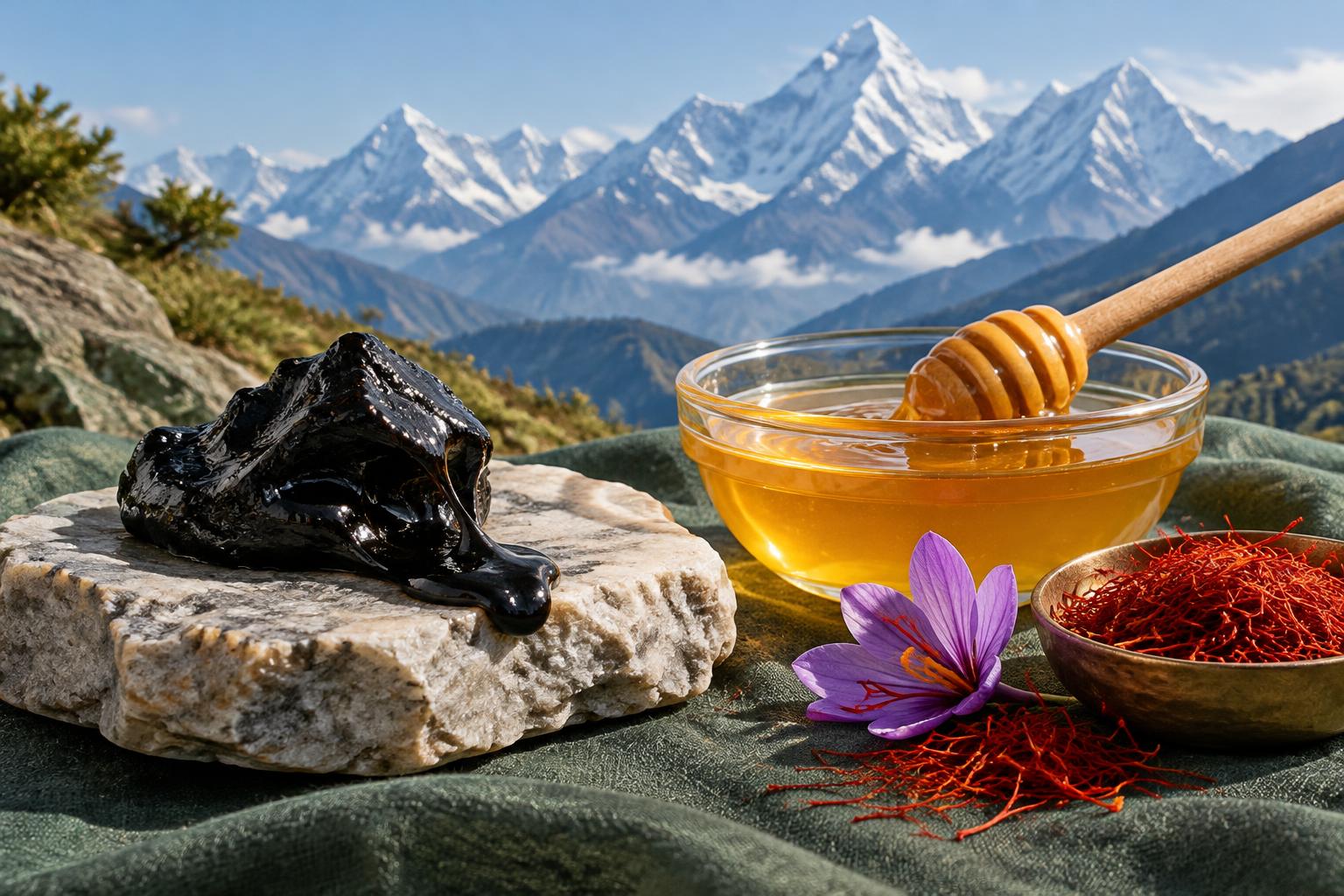
A resin product is sold as a resin-like preparation. A honey stick combines shilajit with honey and sometimes other ingredients. Shivvra’s blend also includes saffron. They are not interchangeable merely because both names contain shilajit.
Honey changes the ingredient and nutritional profile. A sachet’s total weight includes the carrier, while a resin label may describe a different serving system. Start the comparison with what each product actually contains.
Compare the label, not the package size
Look for the declared amount of shilajit per serving and read how a serving is defined. Do not compare a whole honey stick with the same weight of resin as though they contain equal shilajit amounts.
Even matching declared amounts do not prove matching effects. Preparations and processing can differ, and research on one specified extract cannot establish equivalence across all products.
Handling and convenience
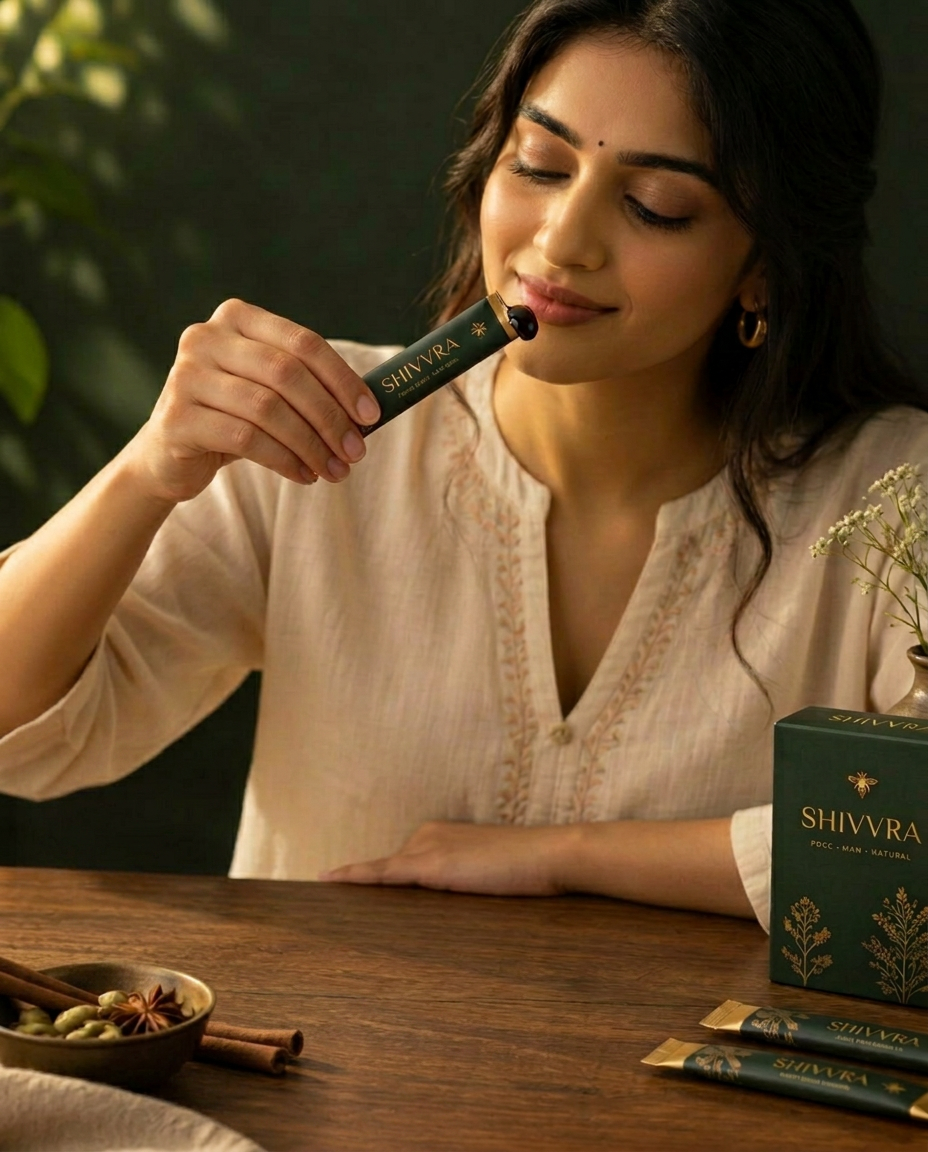
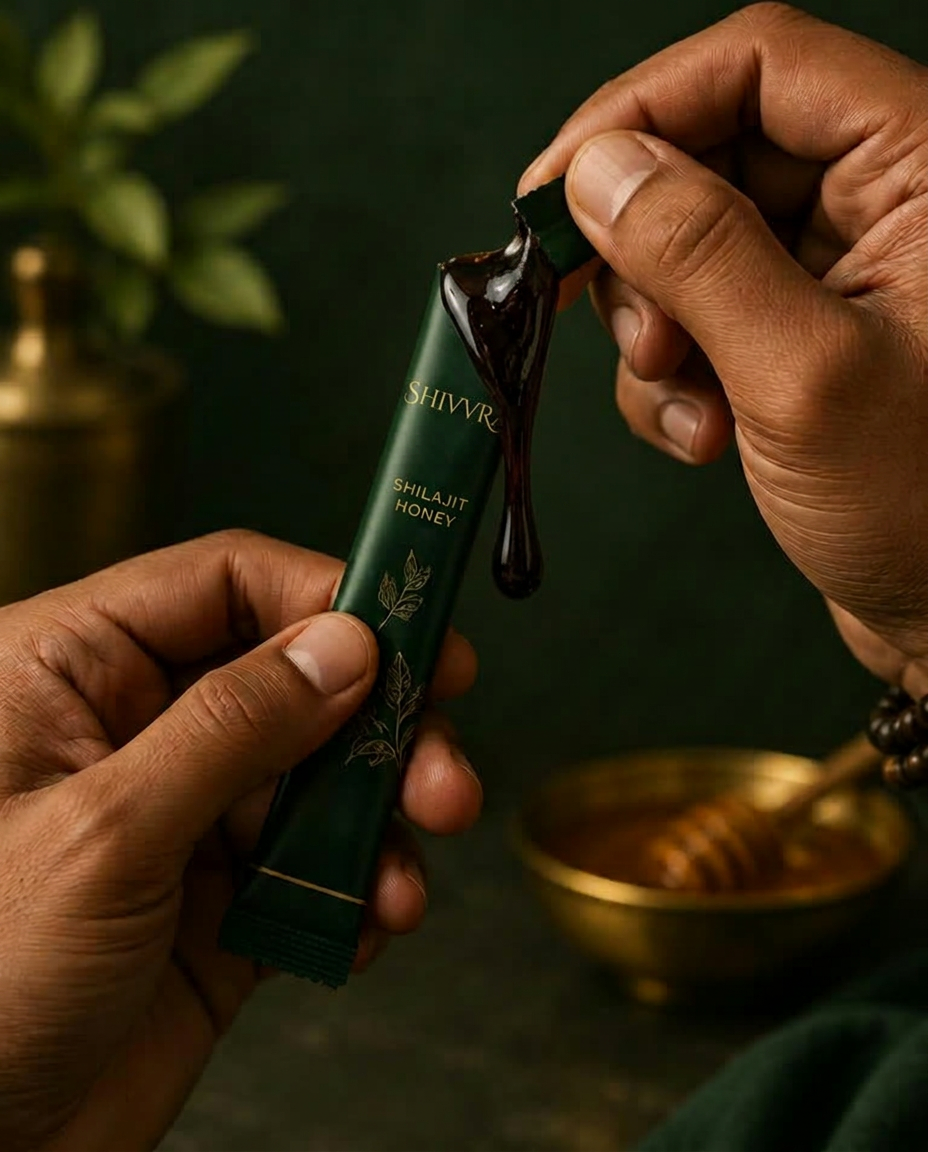
A sealed stick provides a portable, portioned format. Shivvra shilajit honey can be taken straight from the sachet without adding it to chai or water. A jar of resin may require measuring or preparation according to its own directions.
Neither format is automatically better. Some people value a sealed sachet; others prefer a jar. The practical question is which format lets you follow the product’s instructions reliably and handle it cleanly.
Ingredients and quality still come first
If you monitor sugars, a honey-based product needs to be considered within that plan. If you need to avoid an ingredient, check the whole blend rather than only the headline ingredient. Both formats require appropriate sourcing and quality disclosures.
- Compare complete ingredient lists.
- Check serving definitions and warnings.
- Ask for relevant batch-specific testing.
- Consider storage directions and how you will carry the product.
Make a practical, not medical, choice
Choose the format for transparent information and suitability, not a claim that one always absorbs faster or works better. Such claims need evidence from the specific products being compared.
If you take medicines or have a health condition, discuss the exact formulation with your clinician. A convenient format should support a careful decision, not replace one.
Sources & further reading
- Examine: shilajit research and evidence overview
- FSSAI: food standards for sweetening agents, including honey
Educational information, not medical advice. These articles are not clinically reviewed. Ingredient research does not prove effects of the finished Shivvra product. Follow your pack’s directions and consult a qualified clinician about suitability. Editorial photographs are illustrative; some are AI-generated.
Meet the honeystick.
Shilajit, honey and saffron. Taken straight.